Love Is...
"I want to be in this world because this world has you in it."
Michael Lee
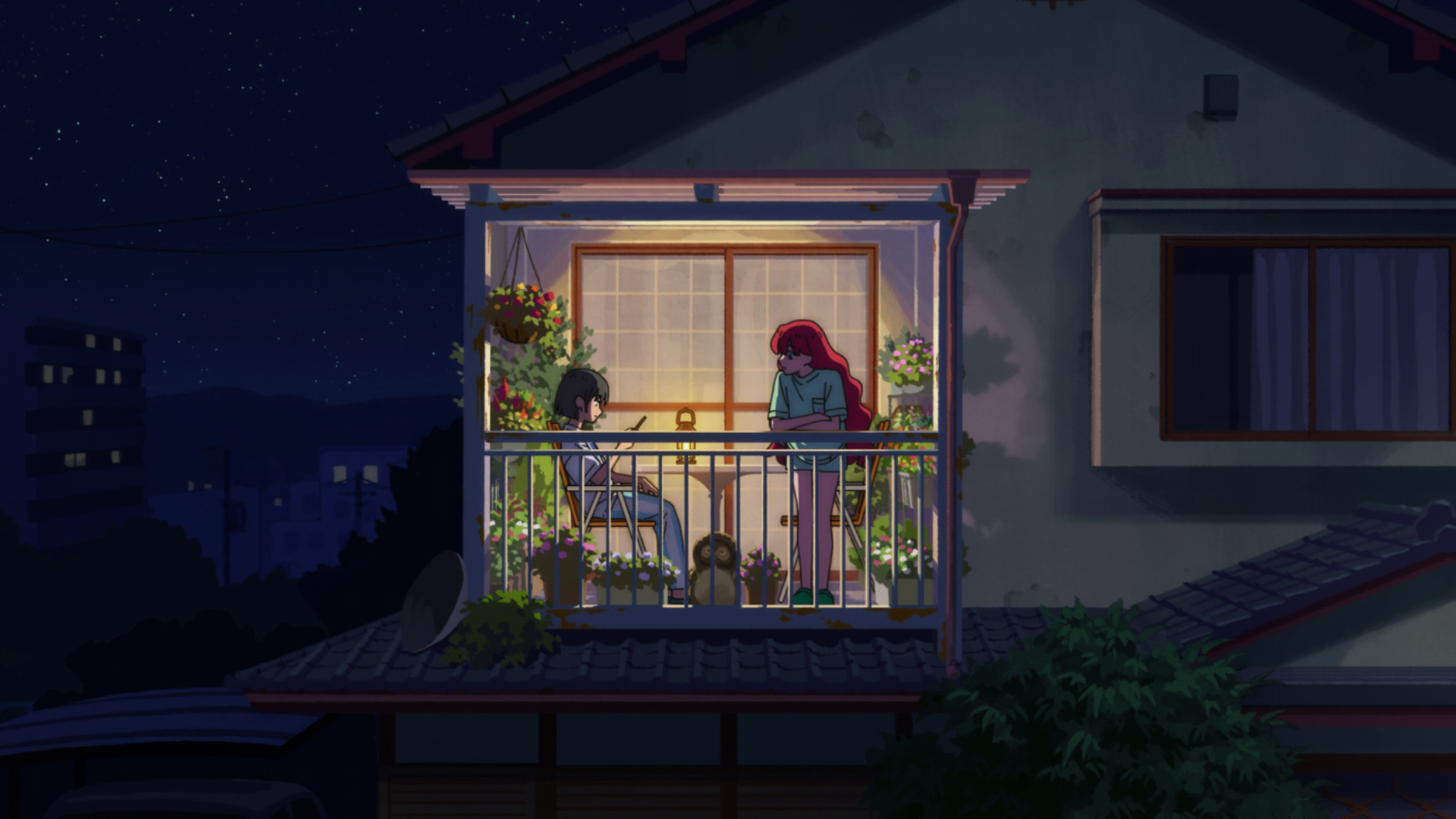
Goodbye, Lara | Kinema Citrus
It doesn't always happen like it does in the movies. In fact, it rarely ever does. And yet… we've been conditioned to look for the grand gestures, the incredible declarations, the intense physical connection to validate, and prove to others, our feelings of love. We are bombarded by cultural norms that have turned love into an industry. Love as consumption. Love as status. Love as tax benefit. Aspects of modern life revolve around love happening. There is pressure to find and be in love, and failing to do so and failing to perform the socially accepted acts of love can be seen as being defective. The language of love has seemingly been codified into law. For all the ways that it can be expressed, and crucially for all the ways love can simply exist as a intimate personal feeling, if it doesn't fall into the socially performative definitions and actions that the masses rely on to trace love in an individual, how can it even be called love?
If a tree falls in the woods…
This is about the original anime Goodbye Lara (based on Hans Christian Andersen’s The Little Mermaid), but it's also about how we interrogate the definition of love, even as we talk about a series that is trying to show us that the arbitrarily established laws of love can be oppressive. There is love to be found outside of the narrow standards we have set, but we have to open our hearts more to see the beautiful ways in which love can reveal itself to us.
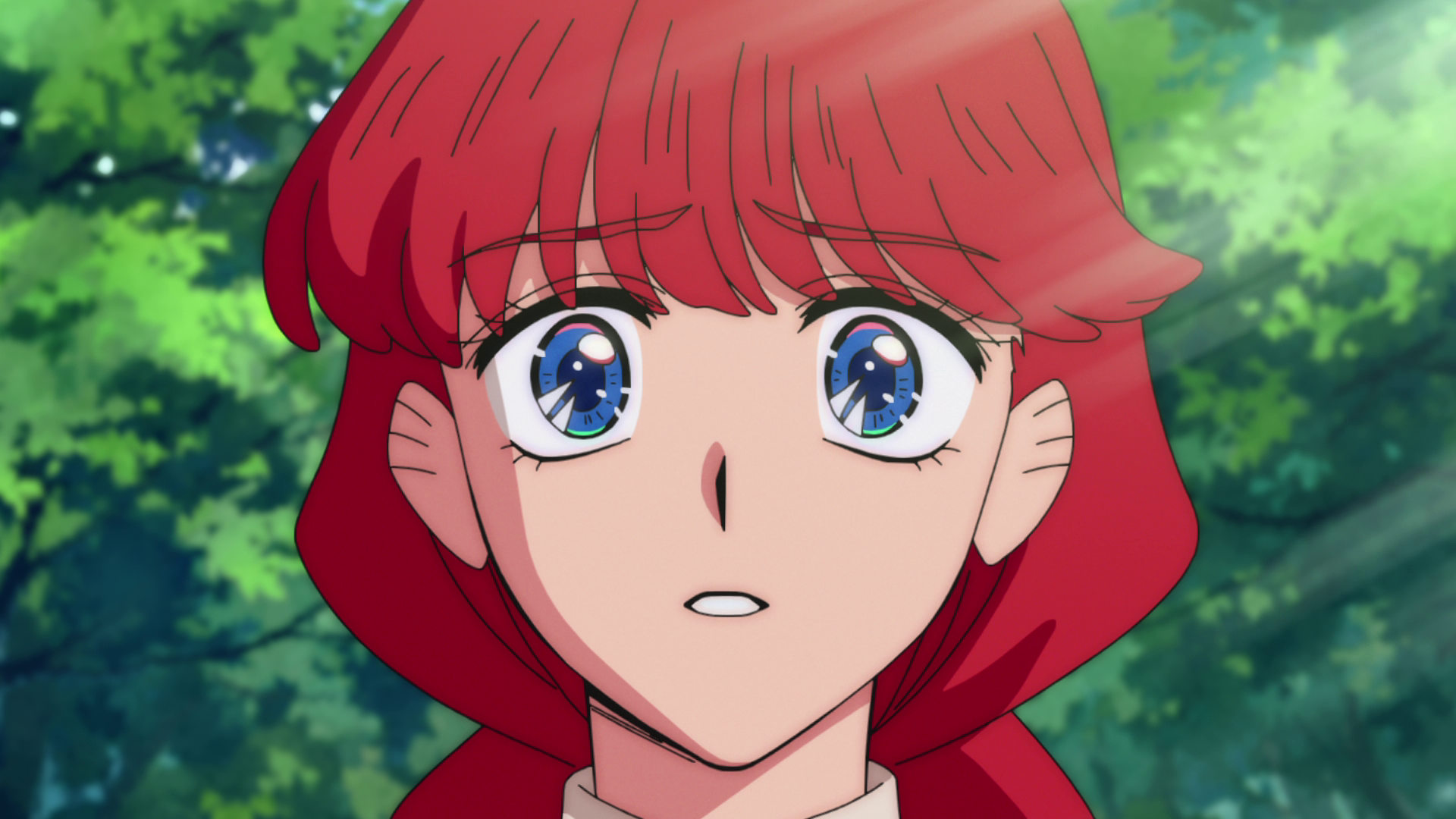
Most of us are not burdened with bringing light back to our mermaid kingdom and saving our merfolk subjects with the power of love. But, in various ways, a similar pressure is applied to us as we process our feelings towards others. Should I feel this way towards this person? Am I expressing my love correctly?
Lara's journey is, at first, singularly focused on the notion of finding "True Love". This is what she was raised to believe would save her kingdom. But, she is told, true love can only happen between merfolk, never with a human. Lara is determined to prove that love between a human and mermaid is possible, that it can be true love. At every point in the story where Lara is seeking this vague notion of what true love constitutes, she is met with signs—and the sinking feeling—that what she thinks she is seeking is not at all what her personal idea of love is. It must be the prince on the white horse. No? OK, 200 years later, it must be his reincarnated failson. It has to be him, time is running out, the light of the mermaid kingdom is fading…
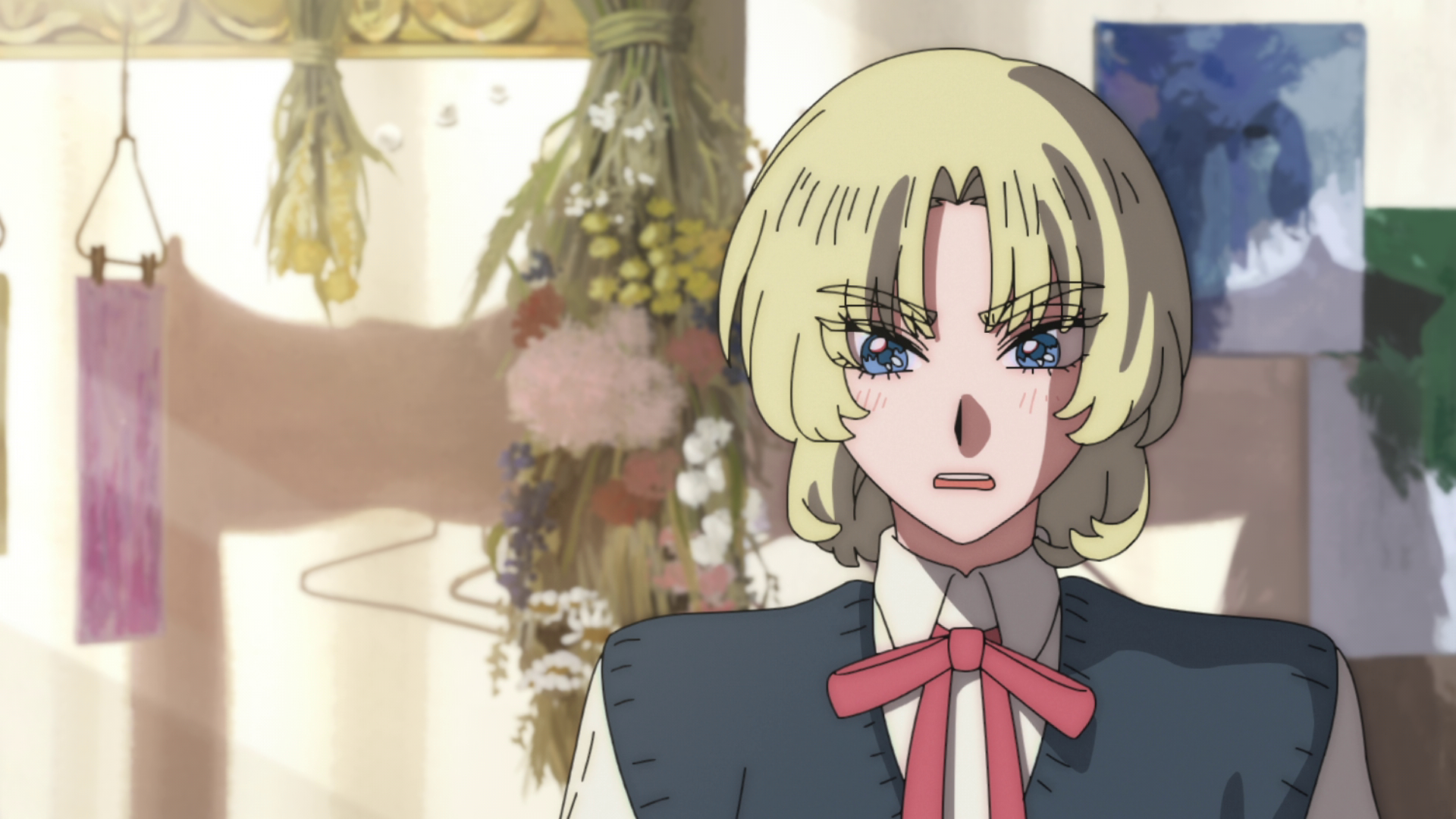
“Why is it that when I try and date him, something feels off. He's supposed to be my true love!”
“Why is it that when I'm given a can of hot cocoa from my cool roommate my heart swells?”
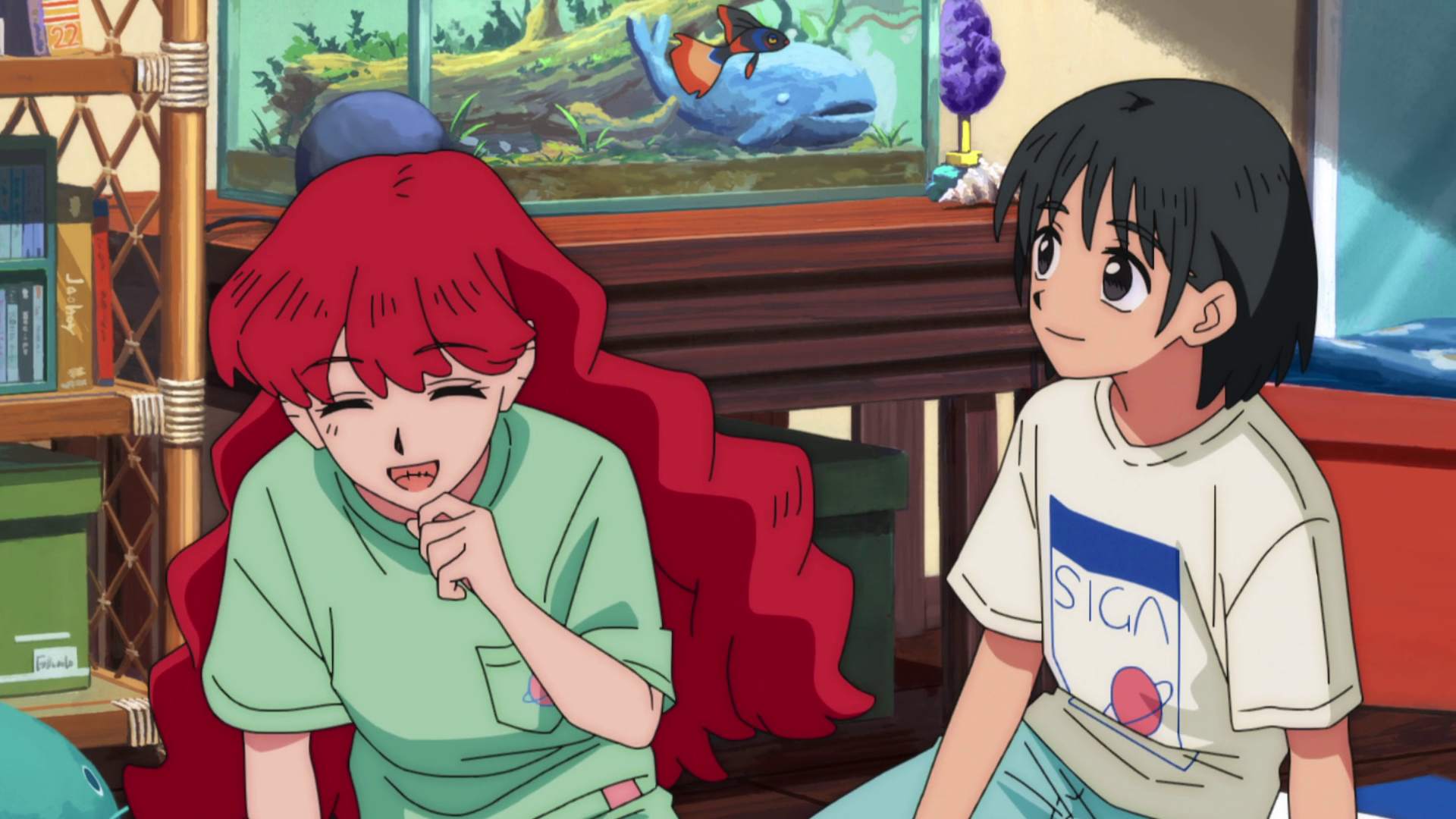
It seems pretty straightforward that Mari, Lara's cool roommate, is Lara's true love. There are literal flashing lights to tell us that this is the case. And yet… somehow this isn't enough for the audience. Lara doesn't express her love the way the audience wants, and so it somehow isn't actually love. We’re being baited. What an ugly way to read the character. It is no longer about the work of art telling its story, it is all about the expectation of how the viewer thinks Lara should act. The very pressure that Rowan, Lara's father, placed on her—the pressure to perform love a certain way—is being expected of her by the audience using the normative "laws of love" we have culturally codified (and that are explicitly critiqued in the series). And somehow, the "laws of queer love" seem to be even more explicit and must not remain as mere ‘subtext’. It must be painfully loud and proud to matter.
Lara's biggest declarative statement that she "wants to live in the world where Mari is" is profoundly romantic. It's not just Mari that she is in love with, it is literally everything in Mari's world that Lara is in love with. This is an incredible expression of love. To see the world itself as something so beautiful that it too is love, something that can be loved and capable of giving love to someone. Freed from the oppression of being told what love is, Lara can now find her true self, and love the world that has given her grace to do so. It might not center Mari according to the "laws of love", but it includes Mari centrally within it. Lara wanting to take in all of the human world and love it too does not diminish Mari's place in Lara's heart.
Lara's love is a symphony, not a solo.
She needs strings, woodwinds, brass, and percusssion to express the depth and richness of her love, something that a single violinist cannot express. (This isn't to say that a solo can't also be beautiful. Émile Sauret's Étude-Caprice No.1 Op.64 is a gorgeous piece. But Lara is going for more of a Rachmaninoff Symphony No.2 vibe.) It is the concert of the human world that provides the soundtrack for Lara's feelings on love, and its Mari with whom she wants to share an earbud to that symphony.
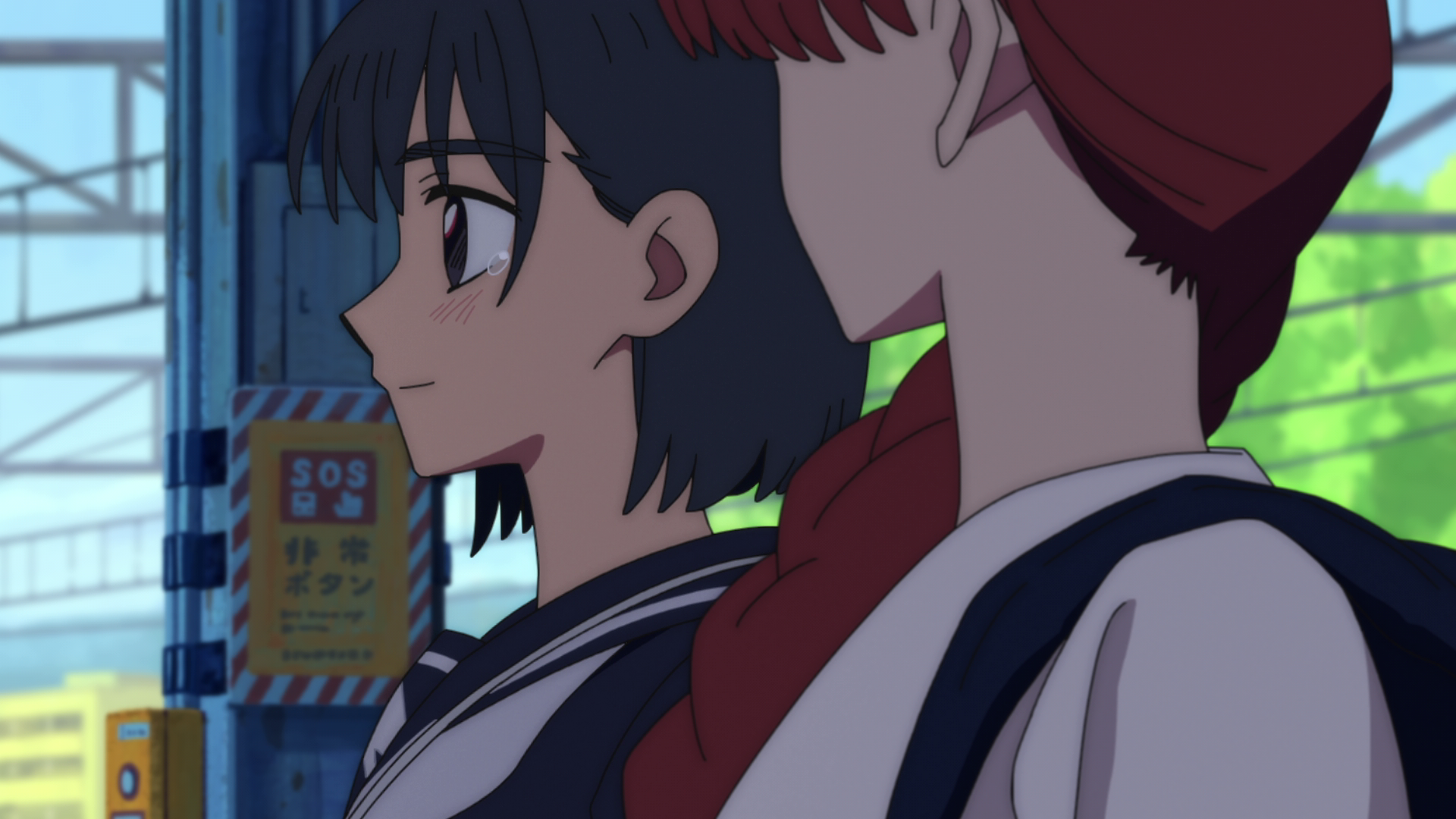
The last thing I'll say about Goodbye Lara, is in regard to the 'cold' ending we received, where Lara moves a couple towns over to live on her own (and pursue her desire to become a full-fledged pastry chef). To me, this is also love. Some online observed that Mari did not see much character growth during the series, and this is true, because Lara interrupted everything going on in Mari's life. Interrupted her grief for her mother, interrupted her ambitions to become a better boxer, interrupted her family life. And while the Otsu family were welcoming and loving beyond what would have been expected, Lara could never shake the feeling of being a burden to them. Lara removing herself, if only temporarily, from Mari's life is an act of love, to give Mari time to grow, to process her own feelings, to greive her mother. Lara's 'cold' attitude at the end is a facade she must maintain lest she slip back into what her selfish heart might desire, to always be that interruption in Mari's life. It could foster unhealthy dependencies in the relationship. These aren't terms Lara would want to love Mari by. The reverse also holds that Lara needs to find her footing as a human in order to better be able to love Mari. She now has the time to do so.
And that is the final key point here, time. When Lara was searching for her 'True Love' the clock was always ticking. Whether that was physical clocks that Kouta and Lisa (Lara's sister) kept in their house, or the harrowing signs that Lara might turn back into seafoam once again, time was limited. Now, time's elastic nature has gone from tightly wound to a slackened, relaxed state. Lara and Mari now have time to properly love one another, and there is no rush. The pressure to express love with immediacy, to fulfill some law of love, to hurry on to the next stage, no longer applies.
The cultural expectation seems to be that once we feel the slightest twinge of love, we must act on it as forcefully as possible, lest the feeling be fleeting and escape us entirely. It's a fear of losing love that drives people to latch on at moment's notice. The ending of Goodbye Lara is telling us that we don't have to rush things. Love will not leave us, it is always there for us to find, or perhaps to return to once again.
There are so many ways to experience love and yet… time and again we tack towards these "laws" that seem to govern love's expression. An emotion so mysterious, so infinitely deep it has been written about for centuries, that has somehow been solved now that we live in this most enlightened age. To think that we know what love is gives us too much credit, it is thinking too highly of us as humans that we've figured out what love is and how it should be expressed.
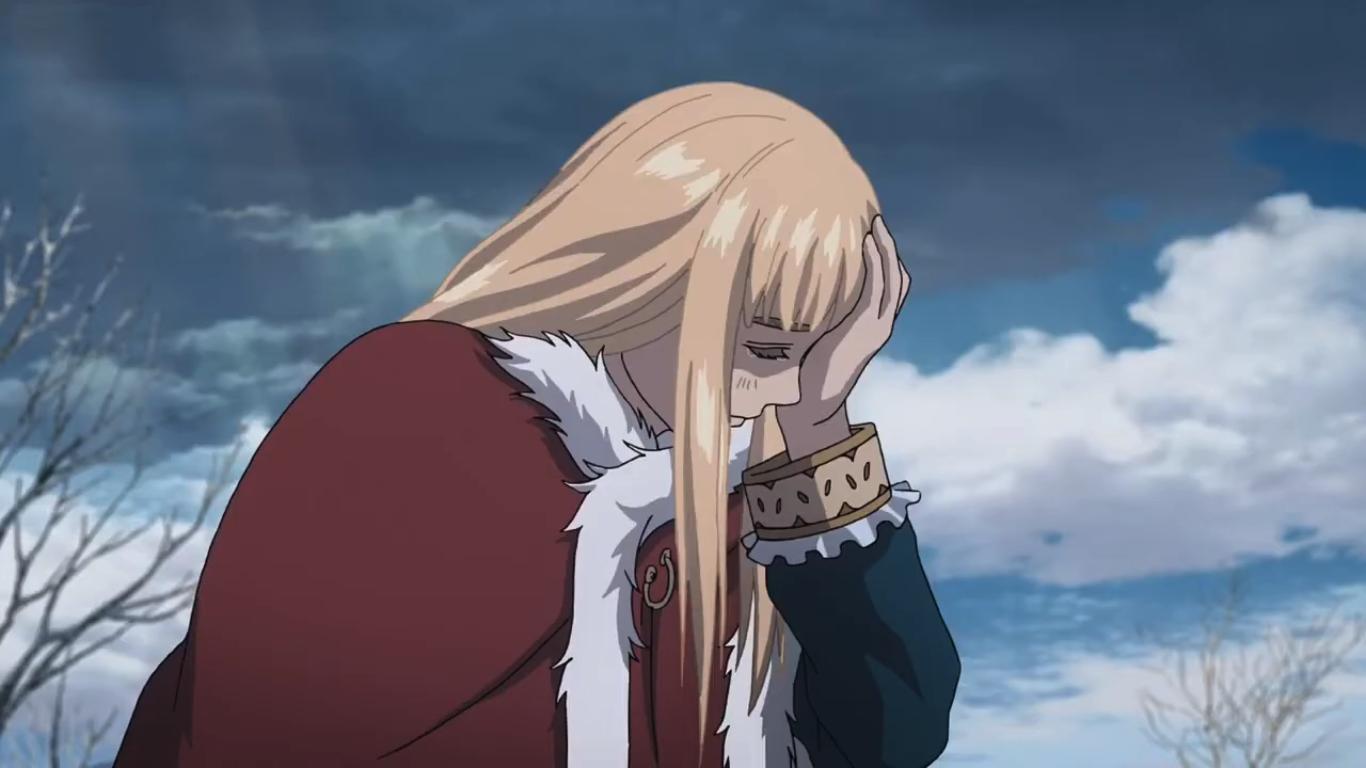
Vinland Saga | WIT Studio
If you have nine minutes to spare, episode 18 of Vinland Saga offers a stunning look at what unconditional love through the lens of Christian theology can look like. A priest speaks with the young Prince Canute who, having lost his dear friend Ragnar, struggles to come to terms with what love is. Ragnar was the only one who loved Canute, and now… is there anyone left who would love him? The priest tells Canute that Ragnar's "love" was actually "discrimination". To put feelings for someone above feelings for another is not love, it is discrimination. The priest then points to a deceased viking, and declares that the dead man is love's true expression. He will no longer hate another person, or steal from one. He will selflessly give his body back to nature without complaint. He is love's true form.
Now, this kind of love isn't practical to live one's life by… really… and while I myself am not religious, the spiritual, selfless nature of love described here allows for introspection and interrogation on how to view love in all its forms. The idea that choosing someone to love above all others being discrimination is a powerful concept to think on when you do catch feelings for someone.
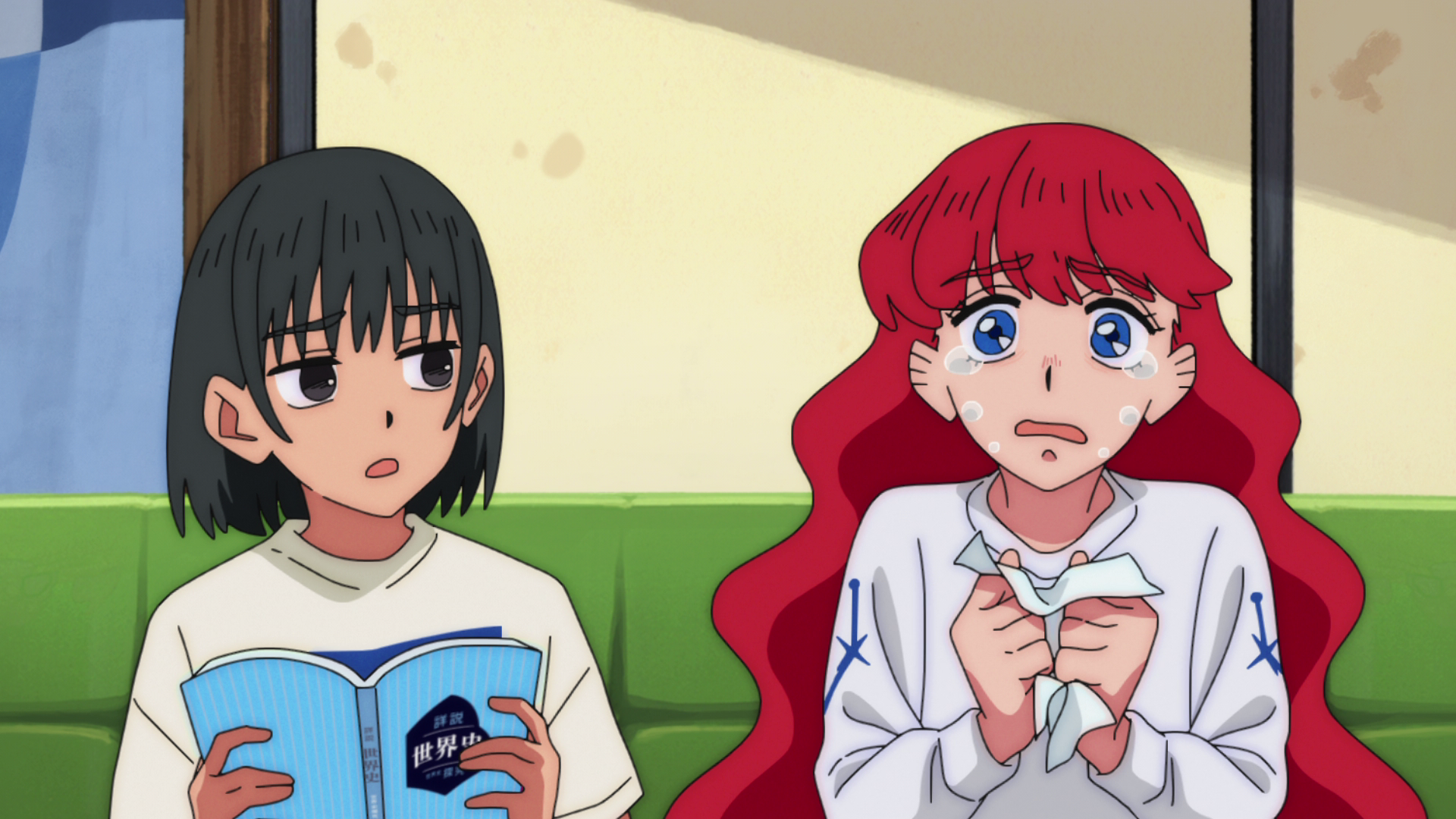
Looking at how Goodbye Lara viewers reacted with such vitriol towards its creators, accusing them of 'yuri baiting' them… of erasing queer love… how can these people ever hope to know love, if their hearts are so filled with hate? The backlash to Goodbye Lara sadly reflects the world we live in. Despite a near infinite potential for love to exist, we choose to ignore the opportunity to feel that love, and discriminate instead. Love is weaponized, used to turn people against one another. Can we blame capitalism? Probably. I would. The conditions that capitalism creates encourage discrimination, to favor one thing over another, it commodifies love, makes it covetous, and it puts kinds of love in competition with each other. Can we blame the hateful rhetoric of politicians and pundits who have perpetrated and been complicit in genocide for the last three years? Oh yes. So much of our own world is disgusting and hateful. Everywhere you look a budding blossom of love dies, poisoned by discrimination. There is not enough equally distributed love. There is no extending of grace to one another. Empathy, a simple form of love, is dead. We need a socialist imagining of love to take root or something.
Love is there in Goodbye Lara, it is strong, it is ever present, and we have to accept that it might not match our definition of love. But to reject the love shown in Goodbye Lara, to favor some imaginary idealized yuri love is the antithesis of love and of having the capacity for it. It is far too negative a worldview for something that should be so beautiful.
I want to believe that love is found everywhere. I feel it when I walk through a field of wildflowers and see a deer crossing the meadow with a fawn following in its footsteps. I feel it when my cat leaps onto my chest at 5am every morning wanting food, purring like a maniac. And I feel it when a high school boxing champ asks her former-mermaid-maybe-girlfriend "did you really mean it when you said you wanted to move in with me" and the reply is "yep, I really meant it." Love is everywhere. It belongs to everyone.